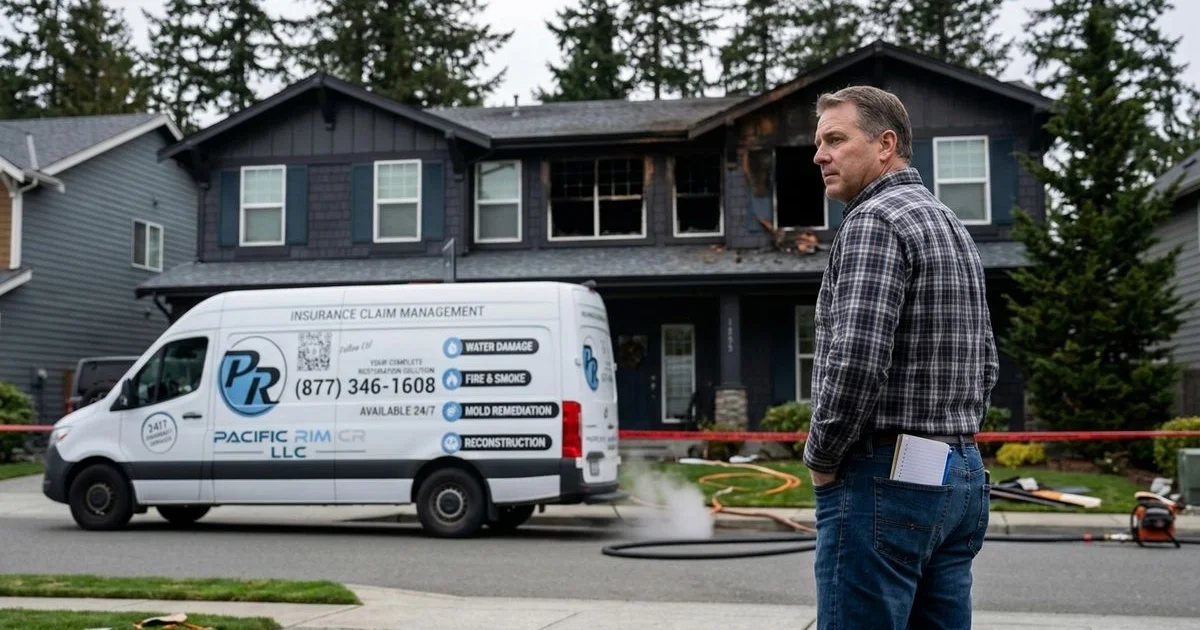
The first 24 hours: what to do after house fire
Our team at Seattle Water Damage Restoration knows the immediate aftermath of a disaster is incredibly chaotic.
If you are wondering what to do after house fire incidents, the most critical step is pausing to secure the scene.
According to 2026 National Fire Protection Association (NFPA) data, a home structure fire is reported every 96 seconds in the US. This means hundreds of thousands of homeowners face these exact same hard choices every year. We see the consequences of decisions made during this critical window every single day.
“The choices you make right now will significantly affect what can be saved and how much your insurance policy covers.”
After the fire department releases the scene, your home sits in an unusual state. The structure may be physically standing but unsafe, and smoke permeates even the unburned areas.
Our priority is helping you make the right choices in the first 24 hours to maximize what can be saved.
These early decisions directly affect your total insurance coverage and out-of-pocket costs.
Step 1: confirm it’s safe to enter
You must never re-enter the property until the fire department or a licensed structural inspector confirms it is safe. Our experts cannot stress this safety rule enough.
Early entry exposes you to severe risks that are often invisible to the untrained eye. Common post-fire hazards include weakened joists, compromised electrical systems, and toxic soot particulates.
- Compromised structural members: Heat weakens roof trusses and floor joists.
- Damaged electrical grids: Never restore power without a certified inspection.
- Hazardous air quality: Residual smoke and fire department chemicals linger in the air.
- Slip hazards: Standing water from hoses creates dangerous surfaces.
We strongly recommend taking wide exterior photos of all sides of the house before you even think about going inside. These outside pictures provide excellent baseline documentation for your adjuster.
Step 2: immediate calls
You need to make three critical phone calls immediately to start the recovery process. These calls can happen in parallel, enabling mitigation work to begin while your insurance processes the initial details.
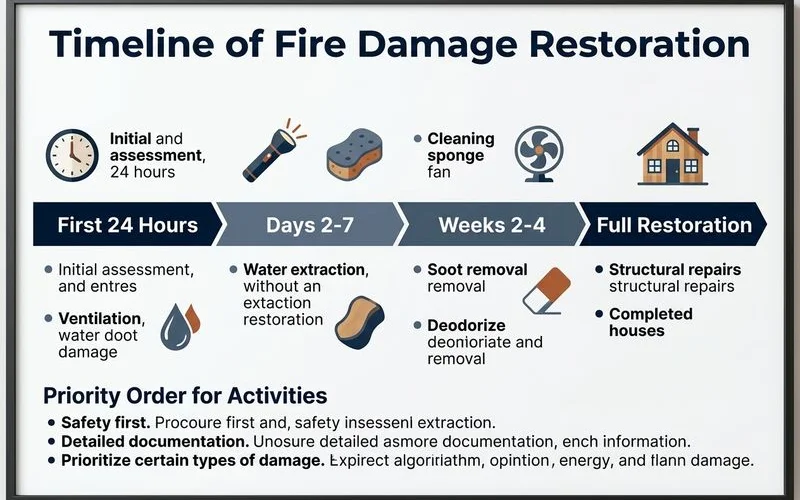
Our experience shows that dividing these calls among adults in the household speeds up the timeline. The three essential calls include:
- Insurance company: Open the claim. Your carrier will assign an adjuster, often a major loss adjuster for significant fires. Have your policy number ready.
- Restoration company: Call us to handle board-up, tarp-up, water extraction from firefighting efforts, and initial documentation.
- Family and friends: Secure practical help with immediate needs like temporary lodging, clothing, and kids’ care.
We can be on-site fast to stabilize the property, often before the adjuster arrives.
Step 3: board-up and tarp-up
Insurance generally requires you to take reasonable steps to mitigate further damage. For a fire scene, that means securing the property against weather, theft, and continued destruction.
Our fire damage restoration crews handle board-up and tarp-up as part of emergency mitigation. In the US, standard residential emergency board-up services average between $400 and $1,200 depending on the time of day and scope of damage.
This board-up cost is typically fully reimbursable under your homeowner’s policy. We focus on sealing every vulnerability fast.
- Board up broken windows: Use heavy-duty exterior plywood to stop rain and intruders.
- Tarp roof openings: Cover burned sections with reinforced tarps.
- Secure entry points: Lock down compromised doors.
- Address electrical hazards: Utilize a licensed electrician to cap live wires.
Step 4: water extraction
Firefighting water is a major secondary issue that requires immediate attention. Extracted within hours, this moisture does limited damage.
Our crews extract firefighting water at the exact same time we perform the board-up process. According to a long-term Scottsdale Report study, firefighters use an average of 2,935 gallons of water to control a residential blaze.
Left to sit, this massive volume of water adds severe rot and mold problems on top of the fire damage. We deploy industrial extractors to pull this moisture out of carpets, subfloors, and walls.
| Damage Type | Primary Threat | Time to Worsen |
|---|---|---|
| Fire Damage | Structural weakness | Halts after flames stop |
| Water Damage | Mold and wood rot | Increases every hour |
Step 5: document everything
Capturing clear photos and videos of all damage from multiple angles is essential before any cleanup begins. Thorough insurance documentation drives the claim, and detailed evidence makes the entire process smoother.
Our project managers strongly advise photographing every affected room before the pack-out starts. If contents are accessible, you should snap wide shots of the room and close-ups of expensive items.
“A strong photo log is your best defense against an undervalued insurance settlement.”
The more evidence you gather, the easier it is to justify your reimbursement requests later. We always review these initial photos to verify the scope of our mitigation plan.
Step 6: pack-out
For significant incidents, a contents pack-out moves your belongings off-site for cleaning and storage. This process requires extreme care to prevent further damage to fragile items.
Our teams utilize advanced contents inventory software, such as iCAT or ContentsTrack, to manage this workflow. These digital tools create a photo-mapped inventory with a strict chain-of-custody.
Salvageable items go to a specialized off-site cleaning facility. We document unsalvageable items directly for the claim so you get properly compensated. See our contents pack-out guides for more specific details on this phase.
| Item Category | Destination | Goal |
|---|---|---|
| Salvageable | Secure cleaning facility | Deodorize and restore |
| Unsalvageable | Digital inventory log | Claim reimbursement |
Step 7: cleanup and reconstruction
The major restoration work begins once the property is secure and empty. This phase transforms a charred structure back into a livable home.
Our technicians execute a detailed sequence to handle soot, odor, and structural rebuilding. In 2026, national data shows professional fire restoration averages $4 to $7 per square foot for typical residential projects.
Larger total losses can easily exceed $30,000 and run for six to twelve months. We manage this entire timeline to keep the project moving forward.
Core Restoration Tasks
Soot removal requires specific techniques for different surfaces. Workers use HEPA vacuums and dry chemical sponges to lift stubborn soot without smearing it.
Our odor elimination process relies on advanced technology like thermal foggers, hydroxyl generators, or ozone treatments. Standard ozone treatments typically cost between $400 and $800, depending on the home’s size.
Structural cleaning prepares the framing for the final reconstruction of drywall, flooring, and paint. We ensure all finishes meet current building codes during this final rebuild phase.
- Soot removal: HEPA vacuuming and chemical sponges.
- Odor elimination: Thermal fog, hydroxyl, or ozone.
- Structural cleaning: Sanding and sealing framing.
- Reconstruction: Drywall, flooring, paint, and finishes.
Step 8: temporary housing
If your home is uninhabitable during restoration, your policy likely covers temporary housing and excess meals. This provision is called Additional Living Expenses (ALE).
Our clients rely heavily on ALE to maintain their standard of living during a long rebuild. For a standard HO-3 homeowner’s policy in the US, ALE coverage is typically capped at 20% to 30% of your primary dwelling limit.
Some policies also impose a 24-month to 36-month time limit on these benefits. We advise you to ask your adjuster immediately about your specific dollar and time caps.
- Hotel bills: Temporary lodging while securing a long-term rental.
- Restaurant meals: Excess food costs if your temporary stay lacks a kitchen.
- Extra mileage: Increased transportation costs to work or school.
- Pet boarding: Fees if your temporary housing does not allow animals.
What insurance covers
Standard homeowners policies generally cover fire damage very well. Limits and deductibles will apply, so understanding your specific paperwork is vital.
Our team regularly coordinates directly with adjusters to ensure accurate scoping and billing. For a total loss, the Coverage A limit determines your maximum payout.
For partial losses, the actual cost of restoration dictates the claim value. We help document everything thoroughly to maximize your approved benefits.
| Coverage Type | What It Protects | Common Limit |
|---|---|---|
| Coverage A (Dwelling) | Structural restoration | Total policy value |
| Coverage C (Contents) | Belongings and furniture | Percentage of Coverage A |
| ALE (Loss of Use) | Temporary housing and food | 20% to 30% of Coverage A |
| Code Upgrade | Required building code fixes | Varies by endorsement |
What to do this week: after house fire steps
Beyond the immediate response, your focus must shift to organization and communication. Figuring out what to do after house fire emergencies becomes a matter of persistent follow-up.
Our top advice is to be patient with yourself as you plan your house fire next steps, because major fire recovery is emotionally and logistically demanding. The most important thing in these first weeks is building a good relationship with your restoration team and adjuster.
The physical work itself is straightforward when handled by professionals. We know that staying organized keeps the project on track.
- Keep all receipts: Everything fire-related is potentially reimbursable under ALE.
- Write an inventory: Document damaged contents while your memory is completely fresh.
- Identify special items: Note what had custom, antique, or sentimental value.
- Establish routines: Set up a weekly project communication schedule with your contractor.
Every single fire presents its own unique challenges. With hundreds of restorations completed, experience shows that the right team makes the process manageable.
Our comprehensive services ensure you have the support needed to get your life back to normal. Contact us today to start your recovery plan.
Frequently Asked Questions
When can I re-enter the house after a fire?
Should I call insurance or restoration first?
Will the smoke smell ever go away?
Related Guides
Fire Damage: Restore or Rebuild?
After a fire, when does restoration make sense vs. tearing down and rebuilding? How the decision is made.
Can Fire-Damaged Belongings Be Restored?
Many fire-damaged contents can be saved. What's salvageable, what's not, and the restoration process.
Smoke Odor and Soot Removal: How It Works
Soot removal and smoke-odor elimination — thermal fog, hydroxyl, and ozone explained.
Learn more about Fire & Smoke Damage Restoration
Talk to a real local dispatcher 24/7. Certified technicians on-site in 60 minutes — direct insurance billing.