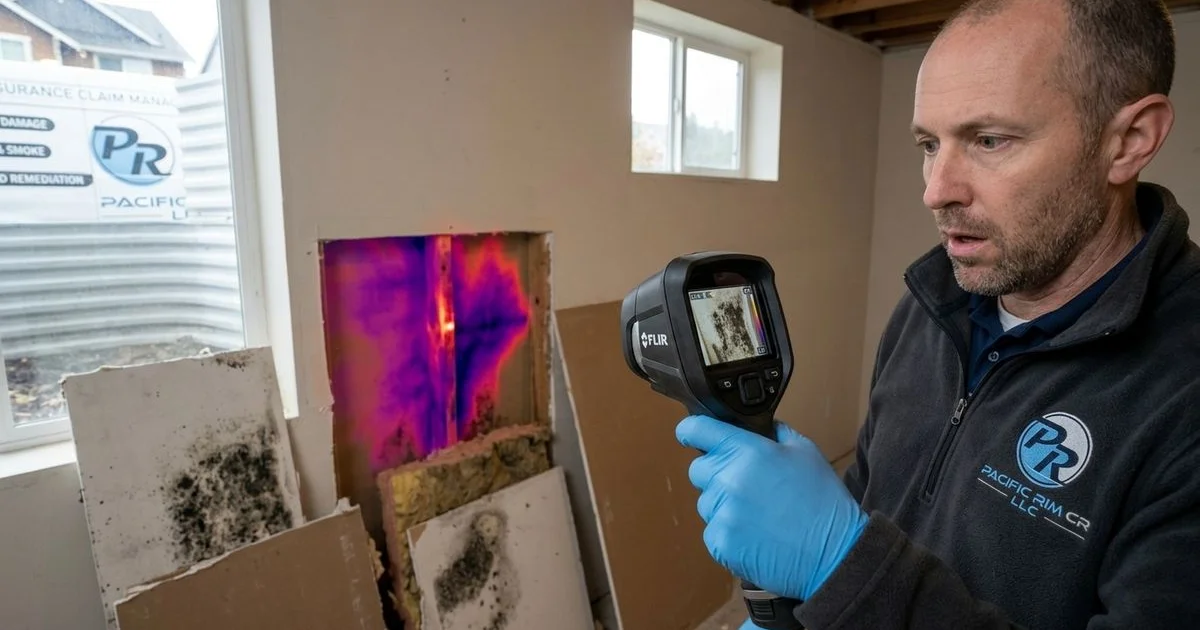
Mold doesn’t always announce itself
Visible mold growth is easy to spot. Black spots on bathroom grout and white fuzz on basement walls usually prompt an immediate cleanup.
Hidden mold is a much bigger concern for property owners facing sudden water emergencies. It often grows in places you cannot see for weeks or months before any obvious sign reaches your living spaces.
At Seattle Water Damage Restoration, we see this constantly after flooded basements or burst pipes. The Environmental Protection Agency notes that mold can begin multiplying within 24 to 48 hours of a water intrusion event.
Those missing signs of hidden mold allow substantial colonies to form out of sight. In Pacific Northwest homes specifically, attic sheathing, crawl space joists, and drywall are the most common trouble spots.
This guide covers the physical indicators, the places you should check right now, and the safest ways to respond to a suspected infestation.
The warning signs
A quick response prevents structural decay. You need to recognize the subtle hints your house gives you when moisture is trapped behind walls.
Here are the primary indicators of an unseen fungal issue.
Persistent musty or earthy smell
A persistent musty smell mold creates is the single most reliable indicator of a problem. Active growth releases microbial volatile organic compounds into the air.
These compounds, specifically one called geosmin, produce a distinctive earthy odor often described as an old basement. If you catch this scent consistently in a room and cannot trace it to a visible source, fungi are almost certainly growing nearby.
We frequently use advanced hidden mold detection tools like Protimeter moisture meters to track these odors to their source. High moisture readings behind a smelly wall confirm the presence of trapped water.
Allergy or asthma symptoms that get worse at home
Indoor allergens are the likely cause if you wake up with congestion or sinus pressure that improves when you leave the house. The American College of Allergy, Asthma and Immunology reports that approximately 10 percent of Americans have allergic antibodies to fungi.
Mold acts as one of the most aggressive indoor allergen sources, especially in damp Pacific Northwest homes. You will likely notice these symptoms spike during the wet winter months.
Our clients often report a complete clearing of their morning congestion once a hidden bathroom leak is repaired and sanitized.
Recurring respiratory infections
Sinus infections, bronchitis, or a persistent cough that recurs seasonally can indicate ongoing exposure. The World Health Organization repeatedly flags damp indoor environments as a primary trigger for chronic respiratory issues.
This health hazard is especially common in homes with crawl space moisture issues. The stack effect pulls damp, contaminated air from the soil directly up into your living areas.
Installing a vapor barrier in the crawl space drastically reduces this upward airflow.
Unexplained stains on ceilings or walls
Brown, yellow, or grayish stains often indicate significant water damage. Where prolonged moisture exists, microbial growth almost always follows.
We urge homeowners to investigate stains in unexpected places, like interior walls far from any obvious plumbing. Paint blistering or peeling wallpaper also points to water trapped inside the wall cavity.
A quick check with a FLIR thermal imaging camera can reveal cold pockets of moisture hiding behind those unexplained spots.
Visible signs at the edges
Fungi often colonize the edge of damaged materials first. You should look closely at junctions where the wall meets the baseboard or where the ceiling meets the cornice.
Modern homes frequently use medium-density fiberboard for baseboards, which absorbs water much faster than solid wood. This makes the bottom edge of your trim a prime location for early discoloration and swelling.
Look for tiny dark spots around window frames where condensation naturally pools.

Sounds of activity from HVAC
A musty odor that gets stronger when your heating or cooling system runs suggests trouble in the ductwork. The AC evaporator coil is a notorious breeding ground due to constant condensation.
This central location spreads spores throughout your entire home with incredible efficiency. Upgrading to a MERV 13 air filter helps capture circulating spores, but it will not kill the source.
You need a prompt professional inspection if your vents smell like damp earth.
Where to look
Catching an infestation early requires checking the most vulnerable parts of your property. Pacific Northwest homes share several common high-risk zones.
A quick visual inspection of these locations often catches colonies before they cause severe structural damage.
Here is a breakdown of the most frequent problem areas and their underlying moisture sources.
| Location | Primary Moisture Source | What to Look For |
|---|---|---|
| Attic sheathing | Condensation on north-facing slopes | Dark discoloration on wood panels |
| Crawl space joists | Soil exposure and poor ventilation | White or gray fuzz on floor supports |
| Behind exterior drywall | Condensation and window leaks | Blistering paint or soft drywall |
| Under kitchen sinks | Slow drain or supply line leaks | Warped cabinet bases and musty smells |
| Appliance cavities | Washing machine or dishwasher drips | Cupping floorboards near the appliance |
| HVAC ductwork | Condensation or past flooding | Dust buildup combined with earthy odors |
We highly recommend checking inside wall cavities at the base if your home has a history of burst pipes. Lingering moisture from past floods frequently settles near the floor plate.
What to do next
Taking immediate action minimizes structural damage and health risks. If you suspect an unseen issue, follow these specific steps.
- Investigate the accessible spots first. A bright LED flashlight and a willingness to inspect dark corners gets you most of the way through attics, crawl spaces, and under sinks.
- Leave the growth undisturbed. You must not touch any fungi you find without proper personal protective equipment.
- Use respiratory protection. An N95 respirator is the absolute minimum, though full Tyvek suits are standard in professional environments.
- Schedule a professional assessment. Reach out if you find anything substantial, cannot locate the source, or experience ongoing health symptoms.
Our professional mold inspection and remediation team uses thermal imaging, moisture meters, and air sampling to find the exact source without unnecessary demolition. The cleanup process is then handled under strict IICRC S520 standards, addressing the underlying moisture source permanently.
Failing to fix the root cause guarantees the problem will return. A reliable sump pump installation, for example, is critical if groundwater frequently floods your basement.
The most common mistake homeowners make is waiting to see if a damp spot gets worse. It absolutely will. Colonies expand steadily once established, meaning the remediation cost a year from now will be significantly higher than today. Contact a restoration professional immediately to protect your property and your health.
Frequently Asked Questions
Can I have mold without smelling it?
Does allergy season worsen indoors?
How do I find hidden mold without tearing walls?
Related Guides
Attic Mold Removal in the Pacific Northwest
Why PNW attics get mold and what proper remediation looks like — ventilation, sheathing, and root-cause fixes.
Basement and Crawl Space Mold Removal
Below-grade mold in PNW homes — sources, removal process, and why source fix matters.
Does Homeowners Insurance Cover Mold Remediation?
Mold coverage depends on the cause. Covered events vs. excluded gradual issues, mold riders, and how to document a claim.
Is Black Mold Dangerous? Health Risks Explained
Stachybotrys (so-called black mold) and the real health risks — what's myth, what's evidence-based, and when to call professional remediation.
Learn more about Mold Remediation
Talk to a real local dispatcher 24/7. Certified technicians on-site in 60 minutes — direct insurance billing.