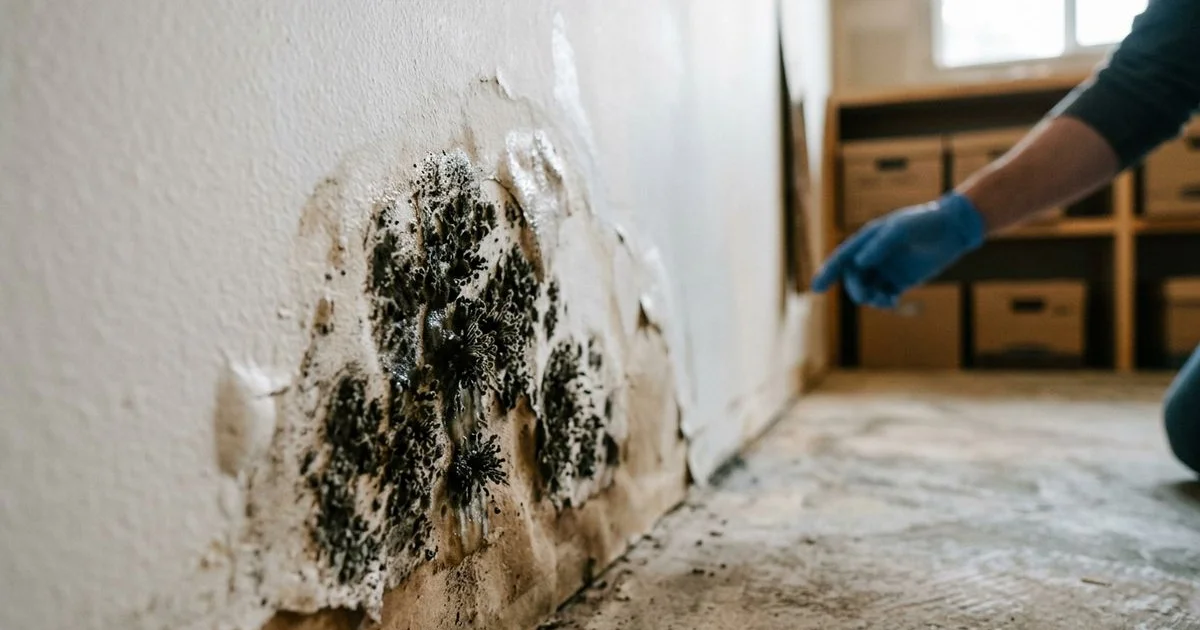
What Stachybotrys actually is
We frequently talk to homeowners who panic at the first sight of a dark spot on their drywall. They immediately ask us, is black mold dangerous?
Our team knows that understanding stachybotrys risks requires looking at the actual science.
Stachybotrys chartarum is the specific species most people fear.
Unlike common molds like Penicillium that sprout in just 24 to 48 hours, Stachybotrys requires a persistent water source and typically takes 8 to 12 days to form visible colonies. We see this aggressive fungus feed heavily on high-cellulose materials. Wet drywall paper and water-damaged wood framing are its ideal food sources.
The real health concerns
You must evaluate the true black mold health effects before making any sudden decisions.
Allergic reactions
We always advise clients to monitor their physical symptoms after a water leak. Airborne spores act as severe respiratory irritants. Our experience shows that sensitive individuals will notice symptoms like sneezing, itchy eyes, and skin irritation very quickly. A 2026 data review shows that nearly 47% of residential buildings in the US show visible mold or a detectable mold odor.
Respiratory irritation
The link between damp homes and breathing issues is undeniable. We treat these environments as hazardous work zones for a very specific reason. Current Centers for Disease Control and Prevention (CDC) statistics indicate that 21% of asthma cases in the US are directly linked to dampness and mold exposure. Our technicians wear specialized gear because prolonged exposure leads to coughing, wheezing, and sinus pressure. Children and the elderly face the highest vulnerability.
Mycotoxin exposure
This specific topic generates the most debate among health professionals. We recommend a conservative approach for anyone with a compromised immune system. Stachybotrys chartarum produces specific chemical byproducts called trichothecenes under certain high-moisture conditions. Our industry partners confirm these mycotoxins are dangerous in heavy occupational exposures, though residential risks are less defined. You should avoid sustained exposure regardless of the specific fungal species present.
What’s myth or overstated
There is a lot of misinformation online about fungal growth. We constantly have to educate property owners on what actually works and what wastes their money. The popular reputation of toxic mold has definitely run ahead of the verified science. Our crews want you to be aware of these common misconceptions:
- Bleach kills everything: The Environmental Protection Agency (EPA) and OSHA do not recommend bleach for porous surfaces, as it only removes surface discoloration while leaving the embedded roots intact.
- All dark spots are Stachybotrys: Cladosporium and Aspergillus are incredibly common household molds that also appear dark green or black.
- Immediate cognitive decline: The claim that typical household exposure causes universal toxic mold syndrome with memory loss lacks strong peer-reviewed evidence.
- Every spot is an emergency: The true urgency depends entirely on the square footage of the growth, the moisture source, and the specific health conditions of the occupants.
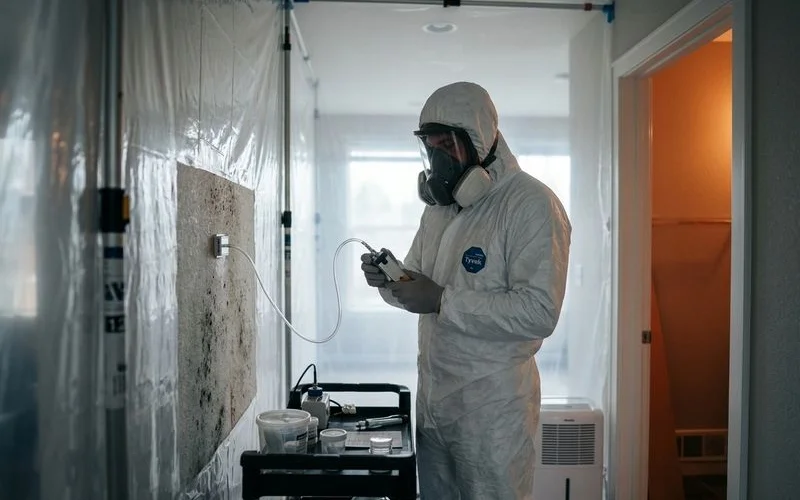
When to call professional remediation
We rely on strict industry protocols to determine when a project requires specialized intervention. The Environmental Protection Agency explicitly draws the line at 10 square feet of visible growth. Our technicians follow these guidelines to keep your property safe. Once contamination exceeds this Level 2 threshold, strict containment protocols and N95 respirators become mandatory.
We regularly handle complex environmental challenges tied to regional weather patterns. For Seattle homes specifically, professional mold remediation is often needed for attic mold caused by poor ventilation. Our crews see the damage caused when the Pacific Northwest receives its average 37 inches of annual rain. Winter freeze-thaw cycles create microcracks in roofs and foundations, allowing moisture to saturate wall cavities and crawl spaces.
| Scenario | EPA Recommendation | Required Action |
|---|---|---|
| Under 10 sq ft, hard surface | DIY Cleanup Possible | Scrub with detergent, fix leak |
| Over 10 sq ft, porous material | Professional Remediation | Containment, HEPA filtration, removal |
| HVAC System Contamination | Professional Remediation | System shutdown, specialized duct cleaning |
The real risk: moisture source
Removing the visible spotting is only half the battle. We refuse to complete a remediation project that ignores the underlying water intrusion. A 2026 RubyHome report notes that 45% of office buildings and millions of homes have active leakage issues. Our crews regularly visit properties where another company simply wiped down the walls, only to watch the same colony return three months later. You must identify and resolve the root cause.
Common moisture sources include:
- Condensation on poorly insulated exterior walls.
- Slow leaks behind refrigerator water lines or dishwashers.
- Clogged gutters pushing rainwater back into the soffits.
- Inadequate exhaust fans in bathrooms and kitchens.
Our comprehensive process diagnoses the specific moisture source as part of every single project. That is the fundamental difference between a permanent restoration and a temporary visual fix.
Testing: when and why
Property owners often ask us if they need to pay for an expensive laboratory analysis right away. We usually tell clients to save their money if the growth is clearly visible and the water source is known. The average cost of professional mold remediation in the US hovers around $2,300, and testing can add hundreds of dollars to that bill. Our strategy prioritizes spending your budget on actual removal rather than redundant confirmation. Certain high-stakes situations do require formal air quality or surface swab testing.
Consider professional testing in these scenarios:
- Real estate transactions: You need definitive proof for a buyer or seller.
- Insurance disputes: A baseline documentation is required to prove the extent of the damage.
- Clearance verification: You need third-party confirmation that a remediation project was successful.
- Specific health concerns: A doctor requests an Environmental Relative Moldiness Index (ERMI) to identify exact species.
Practical takeaway
We want property owners to approach fungal growth with a calm and methodical mindset. The question of whether or not is black mold dangerous has a very nuanced answer.
Our advice is simple and practical. You should address the moisture source immediately, follow EPA guidelines for proper cleanup, and verify the structural integrity of your home. Reach out to a certified restoration professional if the contamination exceeds a small localized patch.
Frequently Asked Questions
Is all dark mold 'black mold'?
Will black mold make me sick?
Can I clean black mold with bleach?
Related Guides
Attic Mold Removal in the Pacific Northwest
Why PNW attics get mold and what proper remediation looks like — ventilation, sheathing, and root-cause fixes.
Basement and Crawl Space Mold Removal
Below-grade mold in PNW homes — sources, removal process, and why source fix matters.
Does Homeowners Insurance Cover Mold Remediation?
Mold coverage depends on the cause. Covered events vs. excluded gradual issues, mold riders, and how to document a claim.
The IICRC S520 Mold Remediation Process Explained
Step by step through the IICRC S520 mold remediation standard — what professional remediation actually involves.
Learn more about Mold Remediation
Talk to a real local dispatcher 24/7. Certified technicians on-site in 60 minutes — direct insurance billing.