Two words that aren’t synonyms
We see the terms “mold removal” and “mold remediation” used interchangeably all the time in contractor marketing. The truth is, these are entirely different approaches to property damage.
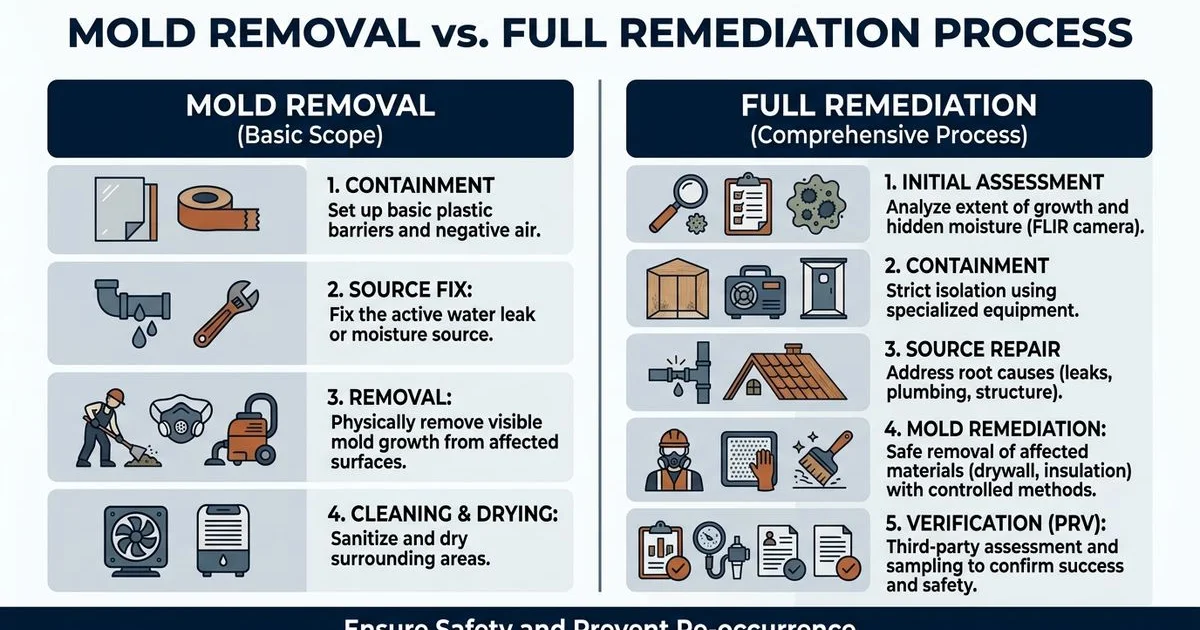
Mold removal vs remediation is essentially the difference between a quick surface wipe and a permanent, structural fix.
Our team at Seattle Water Damage Restoration constantly meets homeowners who paid for basic removal, only to face a massive regrowth problem weeks later. A quick demolition job ignores the underlying moisture source.
We are going to clarify exactly what sets these two methods apart. Let’s look at the science of mold growth, the strict protocols professionals follow, and the direct impact your choice has on insurance claims and health.
What removal alone gets you
Mold removal alone gets you a temporary cosmetic fix that physically removes the visible stain but ignores the root cause. This basic approach simply tears out the ruined drywall or insulation without stopping the microscopic spores from spreading.
We regularly encounter properties where a handyman performed a basic tear-out, only to cross-contaminate the entire home. The U.S. Environmental Protection Agency explicitly warns against DIY or amateur cleanup if a moldy patch covers more than 10 square feet. A patch larger than a 3-foot by 3-foot square requires a certified professional because spores spread rapidly into the air during demolition.
Our crews see the consequences of skipping proper containment every single week. Mold colonies can establish themselves in just 24 to 48 hours after a water event.
A handyman or non-specialist contractor doing a simple “mold removal” typically follows this sequence:
- Sees the visible mold growth on the surface.
- Removes the affected drywall, insulation, or baseboards.
- Optionally sprays household bleach or a basic commercial cleaner.
- Closes the wall back up with new materials.
- Bills you for the cosmetic work.
We know that this process leaves critical vulnerabilities behind. The visible stain is gone, but the environmental conditions that caused it remain entirely untouched.
Here is exactly what this basic service is missing:
- Containment systems: No barriers to prevent microscopic spore spread during the messy tear-out.
- Source diagnosis: No thermal imaging or moisture meters to find the hidden leak.
- Professional antimicrobials: Missing EPA-registered treatments that offer actual residual protection.
- Cross-contamination cleanup: Fails to HEPA vacuum the surrounding areas impacted by the work itself.
- Clearance testing: No scientific verification that the air is clean and the job was effective.
Our post-inspections often reveal that spores released during amateur removal have now settled into the HVAC system. Within a few months, the mold typically returns with a vengeance. The second infestation is often far worse because the invisible spores are now distributed well beyond the original site.
What remediation gets you
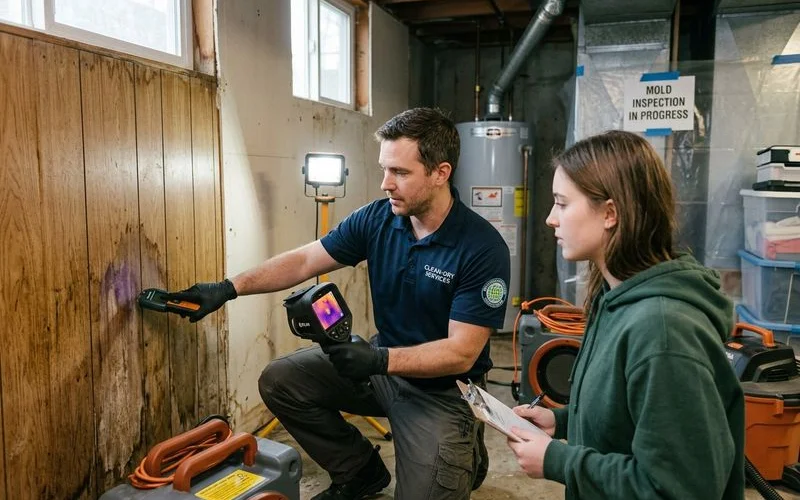
What is mold remediation? It is a comprehensive, science-based process that identifies the moisture source, contains the hazard, removes the contamination, and verifies the air quality. This method ensures the structural integrity of your home is protected and the fungal growth cannot return.
We strictly follow the IICRC S520 Standard for Professional Water Damage Restoration on every project. This industry protocol dictates exactly how an indoor environment must be dried and treated to ensure absolute safety.
Our protocol requires dropping the structural moisture content well below the 16% threshold where mold cannot survive.
A true professional mold remediation project involves these precise steps:
- Inspection by AMRT-certified specialists: Experts trained in Applied Microbial Remediation inspect the full scope of the damage.
- Precise source diagnosis: Using advanced tools to locate the plumbing leak, ventilation failure, or vapor barrier flaw.
- Strict containment: Sealing the zone and using negative-air machines with HEPA filtration to capture 99.97% of particles down to 0.3 microns.
- Safe physical removal: Taking out affected materials while wearing proper Personal Protective Equipment.
- EPA-registered antimicrobial treatment: Applying medical-grade solutions like Fiberlock Shockwave, which carries over 130 organism kill claims, for lasting residual protection.
- Source repair: Fixing the exact plumbing or structural issue that caused the moisture in the first place.
- Independent verification: Passing visual inspections and optional clearance air testing.
- Complete documentation: Providing comprehensive reports, photos, and readings for your insurance carrier.
We guarantee that the mold is gone, the cause is fixed, and the work is verified. The result actually lasts, saving you from a recurring nightmare.
Why this matters for insurance
Insurance carriers view documented remediation as a valid mitigation expense, whereas amateur removal often leads to denied claims and canceled policies. A standard HO-3 homeowners insurance policy typically only covers mold if it directly results from a sudden, accidental covered peril, like a burst pipe.
We guide homeowners through this complex claims process every day. Most insurance policies impose strict sub-limits on fungi or mold payouts, commonly capping coverage between $1,000 and $10,000 per occurrence.
Our documentation helps adjusters justify releasing those specific funds. A casual tear-out by an unlicensed handyman lacks the moisture readings and photos required to process a claim successfully.
Here are the key insurance risks of choosing basic removal:
- Denied secondary claims: If the quick fix fails and mold returns, the carrier will certainly deny the recurring damage.
- CLUE database tracking: Property claims are recorded in the national Comprehensive Loss Underwriting Exchange database, and unresolved mold issues can prevent you from renewing your policy or selling the home.
- Out-of-pocket exposure: Without professional documentation proving the initial problem was not fully resolved, you absorb 100% of the cost for the second cleanup.
We have seen clients successfully claim a second event as a continuation of the original loss, but only when they possessed meticulous records from a certified professional. A lack of proper documentation leaves you completely on the hook for the entire bill.
Why the distinction matters for health
Proper remediation isolates the contamination to protect your lungs, while basic removal forcefully ejects millions of microscopic spores directly into your living space. These dangerous spores are incredibly small, typically measuring between 1 to 20 microns, making them easy to inhale deeply into the respiratory system.
We prioritize air quality above all else because improper demolition makes the environment significantly more toxic. The Centers for Disease Control and Prevention clearly links indoor mold exposure to severe upper respiratory tract symptoms, chronic coughing, and dangerous asthma flare-ups.
Our containment strategies prevent these particles from drifting into your bedrooms and HVAC vents.
The health impact of tearing out materials without an airtight seal is immediate and severe. Consider these medical realities:
- Spore agitation: Ripping out drywall without negative pressure releases a massive concentrated cloud of spores that far exceeds what the undisturbed colony was producing.
- Toxic species risks: Black mold, scientifically known as Stachybotrys chartarum, requires extreme caution and full-body protective equipment to prevent serious respiratory reactions.
- Delayed reactions: The primary sign that an amateur cleanup failed is when family members develop unexplained sore throats, watery eyes, or skin rashes in the weeks immediately following the work.
We utilize heavy-duty negative-air HEPA scrubbers to continuously filter and clean the air at the active work site. This specialized equipment ensures that your family’s symptoms do not worsen during or after the restoration process.
The questions to ask
Asking targeted, technical questions is the only way to separate a certified remediation firm from a general contractor looking for quick demolition work. A true professional will gladly provide specific names of their tools, chemicals, and certifications without hesitation.
We encourage every homeowner to interview their property damage team aggressively. If someone knocks on your door offering a fast mold cleanup, use this exact checklist to verify their expertise:
- Are you strictly following IICRC S520 standards? Demand to know if an AMRT-certified specialist is directly supervising the project.
- What specific containment system will you construct? Listen for specific industry terms like ZipWall dust barriers, negative-air pressure, and HEPA exhaust routing.
- Which commercial antimicrobial do you apply? Acceptable answers include EPA-registered, hospital-grade products like Fiberlock Shockwave or botanical options like Benefect Decon 30.
- How exactly will you diagnose the original moisture source? A qualified firm will mention using FLIR thermal imaging cameras and penetrating moisture meters, not just a visual guess.
- How do you scientifically verify completion? The contractor should require a visual inspection and strongly recommend independent clearance air testing.
- Will you compile a full package for my insurance carrier? The firm must provide a daily log of moisture readings, extensive photos, and a written scope of work.
Our team provides these answers in writing before we ever swing a hammer. If a contractor responds to these questions with a vague shrug or a dismissive attitude, they are merely performing a removal.
Choosing that cheaper, undocumented route means you will very likely be paying to do the whole job again.
What it costs
Professional remediation carries a higher initial price tag than a handyman’s removal quote because it includes specialized engineering controls and long-term warranties. The total cost depends entirely on the square footage involved, the location of the growth, and how deeply the moisture penetrated the structure.
We constantly review national property data to ensure our estimates remain highly competitive and accurate. According to the latest 2026 pricing data from Angi, the average cost of mold remediation in the U.S. hovers around $2,300.
A standard project typically breaks down into the following pricing tiers:
- DIY or handyman removal: $200 to $800. This low price only covers basic labor and trash bags.
- Standard professional remediation: $1,100 to $3,800. This covers a single contained area like a flooded bathroom or a small basement corner.
- Major structural remediation: $10,000 to $30,000+. This involves severe, whole-house infestations affecting the attic, HVAC system, and deep wall cavities.
Our pricing directly reflects the rigorous scientific process required to guarantee your safety. You are paying for AMRT specialists, commercial HEPA air scrubbers, EPA-registered antimicrobials, and definitive source repairs.
The cheapest initial option is almost always the most expensive path in the long run. A quick tear-out fails to solve the hidden moisture problem, guaranteeing a costly second emergency down the road.
We urge you to invest in a permanent, verifiable solution the first time. Contact a certified restoration professional today to schedule a thorough diagnostic inspection and protect your property for good.
Frequently Asked Questions
Can I just remove the moldy material and skip remediation?
Does insurance treat them differently?
How can I tell if I'm being offered remediation or just removal?
Related Guides
Attic Mold Removal in the Pacific Northwest
Why PNW attics get mold and what proper remediation looks like — ventilation, sheathing, and root-cause fixes.
Basement and Crawl Space Mold Removal
Below-grade mold in PNW homes — sources, removal process, and why source fix matters.
Does Homeowners Insurance Cover Mold Remediation?
Mold coverage depends on the cause. Covered events vs. excluded gradual issues, mold riders, and how to document a claim.
Is Black Mold Dangerous? Health Risks Explained
Stachybotrys (so-called black mold) and the real health risks — what's myth, what's evidence-based, and when to call professional remediation.
Learn more about Mold Remediation
Talk to a real local dispatcher 24/7. Certified technicians on-site in 60 minutes — direct insurance billing.