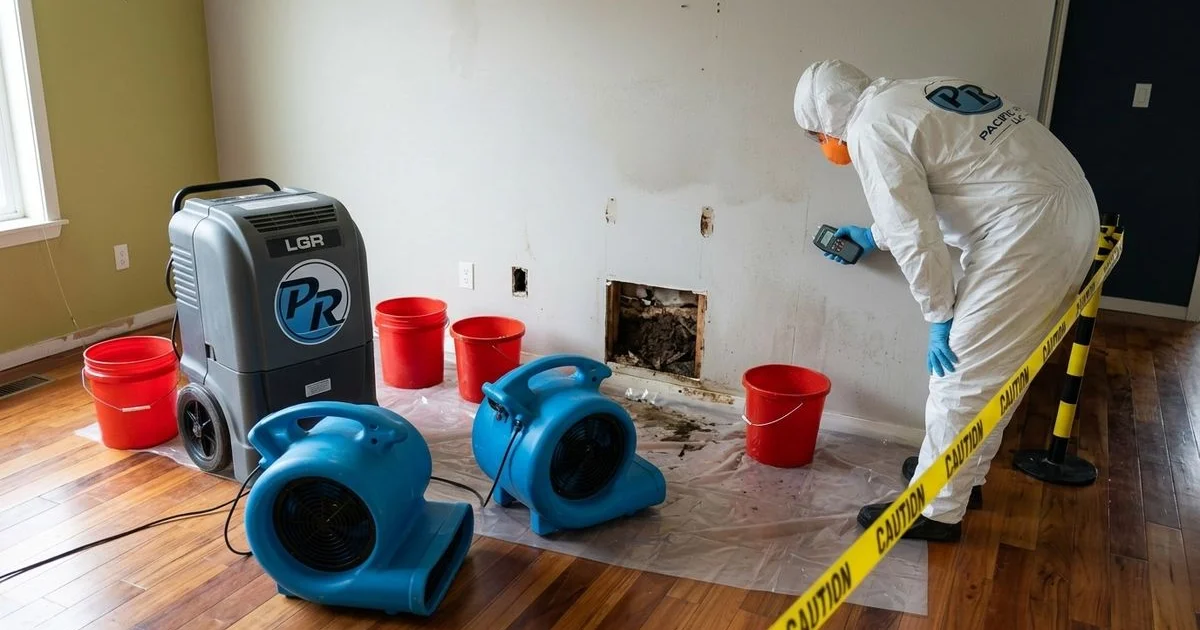
How long does structural drying take? The honest answer: 3 to 5 days
We always tell colleagues that setting realistic expectations upfront prevents major frustrations later. When clients ask how long does structural drying take, we provide data-backed answers. Most professional jobs require 3 to 5 days from setup to the dry standard.
Managing a flooded property requires clear communication.
Our team at Seattle Water Damage Restoration sees how sudden leaks create chaos. Let’s look at the data, what it actually tells us, and explore practical ways to respond.
Many complex factors hide behind the word typical. The actual duration depends on three things: the materials involved, the class of damage, and the humidity conditions in the home.
“A speedy response saves property and lowers final costs significantly.”
We base our timelines on the ANSI/IICRC S500 standard. The 5th edition of this massive 350-page document establishes the scientific baseline for restoration across the US.
HomeAdvisor data from 2026 shows the average US water damage restoration project costs $3,864. Our guide explains what controls the structural drying timeline and how the standard defines a completed job.
Class of damage drives the timeline
The class of damage directly dictates how many days the drying process will take. The IICRC defines four classes of water damage based on how much water absorbed into the structure and what materials are affected.
We use these categories to estimate both time and pricing for every job. Recent 2026 pricing data shows that extraction and drying costs scale rapidly depending on the contamination and absorption levels.
- Class 1: Minimal water absorbed. Hard surfaces only. Typical drying takes 1 to 2 days. Clean water jobs often run $3.50 to $4.50 per square foot.
- Class 2: Significant absorption into carpet, padding, and walls with wicking up to 24 inches. Typical drying requires 3 to 4 days.
- Class 3: Saturation from the ceiling down, soaking ceilings, walls, insulation, and subfloor. Typical drying spans 4 to 5 days.
- Class 4: Specialty drying for hardwood, plaster, concrete, or other dense materials. Typical drying demands 5 to 7 days or more.
Our technicians encounter Class 2 or 3 damage most often during residential water emergencies like burst pipes, appliance failures, or storm intrusion. That frequency is exactly where the standard 3 to 5 day range originates.
The U.S. Department of Agriculture Wood Handbook provides vital context here. Softwood lumber used for framing construction must be targeted for an average moisture content below 19% to inhibit microbial growth. We adjust our structural drying strategy to hit these specific targets based on the class of loss.
What makes water damage drying time longer
Drying takes longer when you deal with dense materials, hidden moisture pockets, cold ambient temperatures, or delayed mitigation efforts. Several distinct factors can easily extend the baseline timeline by several days.
Material Density and Types
Materials matter significantly during the evaporation process. Drywall dries much faster than solid hardwood. Hardwood releases moisture faster than dense plaster or concrete.
Our structural drying service accounts for this variance with material-specific strategies. These specific scenarios require specialized tools like Injectidry systems for hardwood floors and cavity venting for insulated walls. Insulation in wall cavities holds moisture for days even when surface drywall reads dry.
Ambient Climate Conditions
Cold weather slows evaporation across the board. High outdoor humidity makes the dehumidifiers work much harder to pull moisture from the air. We compensate with higher dehumidifier capacity and targeted heat.
This climatic friction can still add days to the project. The American Society of Heating, Refrigerating and Air-Conditioning Engineers (ASHRAE) Standard 160 notes that surface mold can establish on exposed wood when moisture exceeds 16%. We monitor these conditions closely to prevent fungal growth.
Hidden Moisture and Late Mitigation
Water often migrates further than the visible damage suggests. Moisture travels into wall cavities, under subfloors, and behind cabinets. Our discovery of these hidden pockets during drying can extend the timeline as we expand the treatment zone.
Late mitigation drastically increases the severity of the damage. Water sitting for 24 hours before drying begins has already soaked deeply into structural materials. The fungus Serpula lacrymans causes dry rot and activates when wood moisture hits 20% to 30%. The longer the water sits, the higher the risk of severe decay and the longer the drying takes.
| Factor Extending Timeline | Typical Impact | Our Response Strategy |
|---|---|---|
| Dense Materials (Concrete/Hardwood) | Adds 2 to 4 days | Targeted heat and Injectidry systems |
| Cold or Humid Weather | Adds 1 to 2 days | High-capacity LGR dehumidifiers |
| Hidden Moisture Migration | Adds 1 to 3 days | Expanding the containment and drying zone |
| Delayed Response (24+ hours) | Adds 2+ days | Aggressive extraction and anti-microbial treatments |
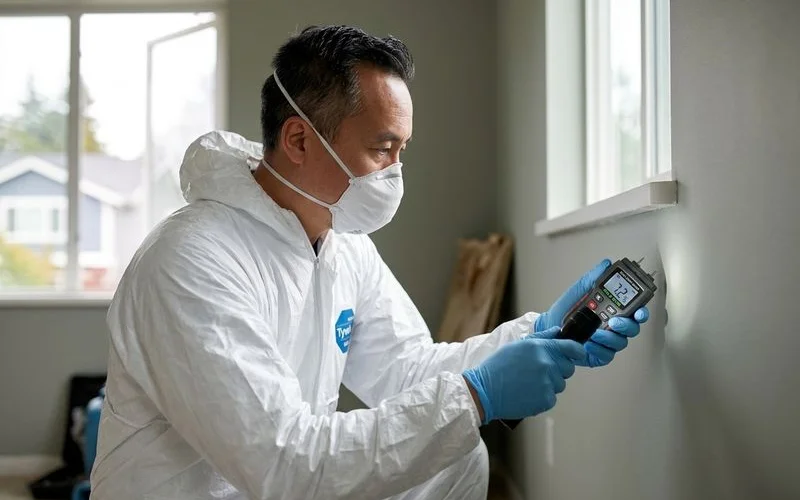
How we monitor (and why fans alone don’t work)
We track progress using scientific measurements because surface dryness is a poor indicator of actual material moisture. Wood might feel dry to the touch, but it can still harbor dangerous levels of water deep inside.
Our process relies on precise data rather than guesswork. Professional drying takes science, not just simple airflow. Wood feels dry to the touch at a 20% moisture content, but it easily grows mold at that level. Drywall often looks perfectly fine while holding stagnant moisture within its gypsum core.
We use calibrated digital moisture meters on every affected material. Technicians establish drying goals by executing several daily steps:
- Logging specific readings daily using pin and pinless AccuMASTER or General Tools meters.
- Comparing these numbers against an unaffected baseline from a dry area to set the target.
- Adjusting equipment configurations constantly based on these required readings.
- Adding dehumidification if the relative humidity runs too high.
- Repositioning air movers if certain surfaces fail to dry evenly.
The National Wood Flooring Association 2024 guidelines state that hardwood floors in a conditioned US interior should measure between 6% and 9% moisture content. Meeting these specific benchmarks prevents long-term structural warping.
When every material reads at or below the documented dry standard, the job is officially done. We do not stop the equipment before reaching that verified point.
What happens if you stop drying early
Stopping the drying process early usually leads to severe secondary water damage like structural rot and extensive mold outbreaks. Pulling equipment prematurely to save on the rental cost is one of the most common causes of long-term property issues.
The CDC and EPA recognize mold as a serious health hazard that requires immediate attention. A surface might look completely dry, but hidden dampness provides the perfect breeding ground for microbes.
We see the following outcomes most frequently when drying is cut short:
- Mold growth inside walls within 1 to 2 weeks.
- Hardwood cupping or buckling several weeks later.
- Drywall paper delamination or permanent staining.
- Persistent musty smells that require professional deodorization.
Fixing these secondary problems often proves financially devastating. A 2026 Angi report notes that subsequent mold remediation costs average between $1,200 and $3,800. That separate, expensive remediation project is entirely preventable.
The 3 to 5 day timeline is never just padding. It represents the actual time the materials require to be fully dry. Insurance policies cover proper drying as part of the initial loss. There is absolutely no financial reason to cut the process short and risk thousands in future repairs.
Why monitoring is documented daily
Daily moisture logs prove to insurance adjusters that the drying timeline was scientifically necessary. These detailed records serve as our internal quality control and your official documentation.
We adjust the equipment based on actual numerical readings rather than a gut feeling. Chapter 12 of the ANSI/IICRC S500 standard dictates this exact tracking method as the operational backbone of structural drying.
“Documented daily progress means there is no ambiguity about why the project required the time it did.”
Detailed logs ensure clear communication with your insurance carrier. Adjusters approve the drying duration based entirely on what the daily readings show.
According to recent 2026 statistics, water damage and freezing account for nearly 30% of all US home insurance claims. Insurance companies scrutinize these frequent claims heavily.
Call your project manager if you are partway through the process and wondering how long does structural drying take for your specific property. We make daily readings visible upon request.
Reach out to Seattle Water Damage Restoration today to schedule an inspection and ensure your property dries safely and completely.
Frequently Asked Questions
Why does drying take several days?
Can I speed it up with my own fans?
How do you know drying is done?
Related Guides
Does Homeowners Insurance Cover Water Damage?
Sudden water damage is usually covered; gradual leaks often aren't. What's covered, what to document, and how direct billing cuts cost.
7 Signs of Hidden Water Damage in Your Home
Recognize the early warning signs of water damage behind walls, under floors, and in your crawl space — before it becomes a mold problem.
Water Damage Categories 1, 2, and 3 Explained
IICRC S500 water categories explained: clean, gray, and black water risk levels and when each needs professional Seattle restoration.
How the Water Damage Insurance Claim Process Works
Step by step: from filing the claim to documenting damage, working with the adjuster, and getting paid for water damage restoration.
Need help with water damage?
Talk to a real local dispatcher 24/7. Certified technicians on-site in 60 minutes — direct insurance billing.