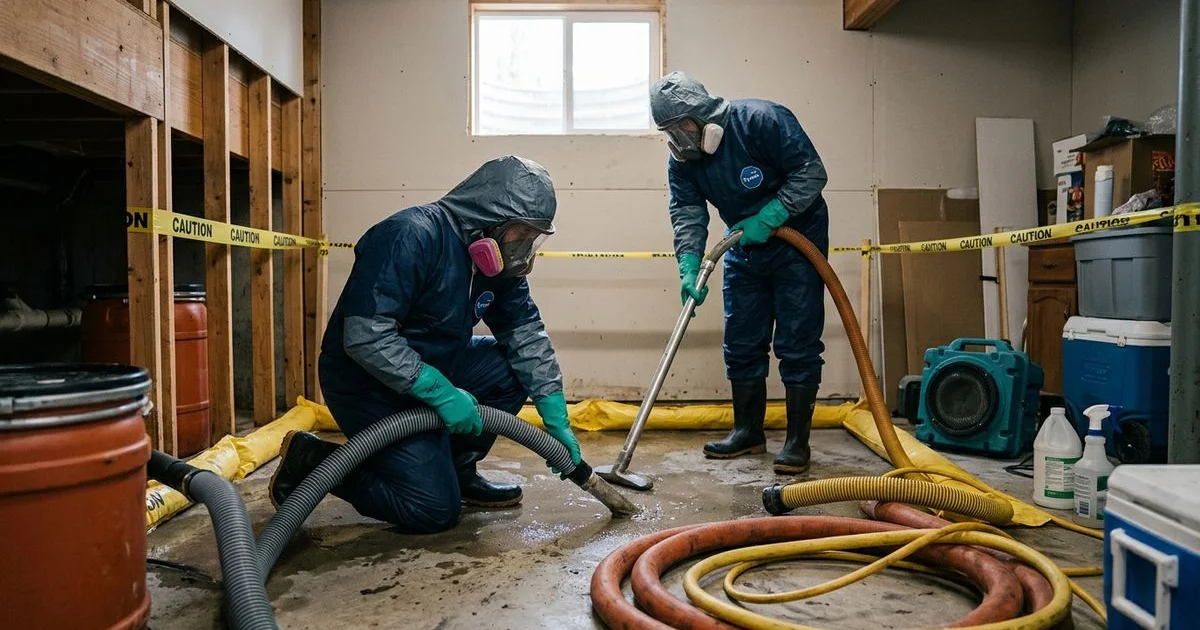
We know exactly how overwhelming a sewer backup feels. The immediate panic these situations cause for homeowners is a reality the team at Seattle Water Damage Restoration sees every day.
This incident requires specific action to protect your property and health.
Our technicians rely on strict 2026 IICRC standards to resolve these hazards. Let’s review the exact sewage cleanup process needed to make your home safe again. Data shows that moving quickly reduces structural damage by half.
What the steps actually look like
Our goal is to give you complete clarity on the road ahead. Professional Category 3 cleanup requires a rigid process to safely remove contamination.
These category 3 cleanup steps isolate the hazard and extract the waste according to federal guidelines.
We follow this exact sequence to prevent cross-contamination of clean areas. Every phase prioritizes occupant safety above all else. The following breakdown details what happens when a mitigation crew arrives.
Step 1: Safety and assessment
We secure the environment thoroughly before beginning any extraction work. The safety and assessment phase identifies electrical hazards and halts the water source.
A proper assessment dictates the entire scope of the mitigation project.
Our crew arrives in marked vehicles wearing full Personal Protective Equipment required by OSHA. Category 3 water contains severe pathogens like E. coli and Hepatitis. This toxicity makes bare-skin contact extremely dangerous.
We mandate several critical safety checks before anyone crosses the threshold.
- Verify the contamination source is contained with no active flow.
- Confirm power is off in affected areas to prevent electrical shock.
- Identify slip hazards and structural compromises.
- Photo-document the scope from outside before entering.
- Walk through with you to confirm the affected zones.
Step 2: Containment
Our technicians install ZipWall barriers and heavy poly sheeting to seal off the affected rooms. Containment isolates the work area using physical barriers and negative air pressure.
This step prevents the spread of aerosolized bacteria into the clean parts of your home.
We stage containment for multi-room backups by creating specific decontamination zones at the exits. High-efficiency HEPA 500 air scrubbers then create negative pressure inside the sealed space. These machines pull contaminated air through filters to capture microscopic particles.
Our staging allows crew members to move safely without tracking waste.
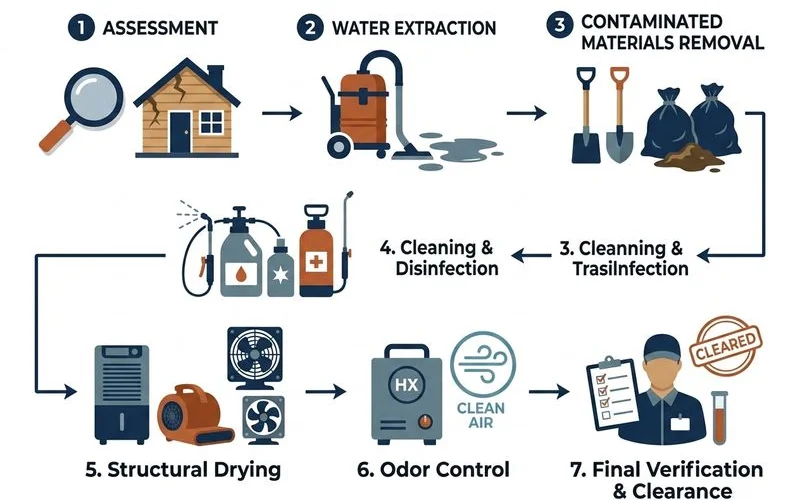
Step 3: Extraction
We pump this contaminated water directly into a sealed tank for licensed disposal at a local treatment facility. Extraction removes the standing waste using specialized sealed pump systems designed for thick materials. Most professional sewage extraction jobs for residential backups finish in two to four hours depending on the depth of the water.
Our equipment fleet includes high-capacity trash pumps that handle up to 50 gallons per minute. Standard water-damage vacuums cannot process solid waste or heavy sludge. Category 3 water requires strictly regulated disposal methods.
We ensure full compliance because local environmental regulations prohibit discharging raw sewage into storm drains. Deep water in a large basement will naturally take longer to fully clear. The table below illustrates the stark differences in extraction power.
| Feature | Standard Wet Vacuum | Professional Trash Pump |
|---|---|---|
| Gallons Per Minute | 5 to 10 GPM | 50+ GPM |
| Solid Waste Handling | Poor | Excellent |
| Sealed Disposal | No | Yes |
Step 4: Removal and disposal
Our professional sewage cleanup protocol manages this entire disposal process directly. The removal and disposal step strips away all porous materials that absorbed the sewage. The Institute of Inspection, Cleaning and Restoration Certification (IICRC) S500 standard strictly forbids drying Category 3 saturated materials in place.
We bag these materials at the source in heavy-duty plastic to seal in the pathogens. You never have to handle the contaminated trash yourself.
The crew cuts away infected building materials to remove trapped moisture and bacteria. Our demolition targets several highly absorbent building materials.
- Carpet, padding, and soft furnishings that contacted the water.
- Lower drywall cut one to two feet above the high-water line.
- Insulation inside the affected wall cavities.
- Particleboard and medium-density fiberboard baseboards.
Step 5: Sanitization
We follow a strict sequence to ensure total microbial control. Sanitization cleans and disinfects the remaining structural surfaces to eliminate surviving bacteria, viruses, and parasites. This crucial phase targets the microscopic pathogens that material removal leaves behind.
Our teams use EPA-registered, hospital-grade biocides to thoroughly treat the exposed framing and subfloors. A simple bleach wipe down is completely ineffective against porous structural wood. The disinfection process requires several specific applications to meet industry standards.
Our technicians execute the following multi-step sanitization protocol.
- HEPA vacuuming to capture dry, loose contamination.
- Damp wiping with a specialized, heavy-duty detergent.
- Application of quaternary ammonium compounds to kill viruses.
- Antimicrobial sealant application on wood framing to block future growth.
Step 6: Drying
Our technicians deploy Low Grain Refrigerant (LGR) dehumidifiers capable of pulling over 130 pints of water per day. Drying utilizes these commercial machines and air movers to reduce moisture in the remaining materials. This process typically runs for three to five days to prevent mold development.
We leave the HEPA air scrubbers running continuously during this phase. The scrubbers capture any residual airborne particles disturbed by the high-velocity air movers. Daily moisture readings document the exact progress of the structure.
Our equipment runs non-stop until the wood reaches its pre-loss dry baseline. Turning the machines off at night dramatically extends the required drying time.
“Consistent, uninterrupted airflow forces trapped moisture out of the structural framing.”
Step 7: Verification
We require a strict passing score before approving the area for reconstruction. Verification confirms the space is entirely clean and dry through rigorous visual inspections and scientific testing. The containment barriers remain in place until the area passes every single test.
Our project managers conduct ATP (Adenosine Triphosphate) testing to measure any remaining organic residue. This specific swab test provides a numeric score called a Relative Light Unit. A failing score indicates that microscopic contamination survived the sanitization phase.
Our testing protocols verify three primary criteria.
- ATP testing to confirm absolute sanitization effectiveness.
- Optional third-party air testing for homes with sensitive occupants.
- Confirmation that all wood and concrete meet the target dry standard.
Step 8: Reconstruction
Our in-house reconstruction crew manages the rebuilding phase to maintain consistent project oversight. Reconstruction rebuilds the demolished areas by installing new drywall, insulation, flooring, and paint. This final step returns your home to its original condition before the backup occurred.
We provide a single project manager to coordinate all the necessary trades and permits. Typical residential sewage rebuilds add one to three weeks to the total timeline. Matching existing textures and paint colors requires specific trade skills.
Our centralized management eliminates the stress of hiring separate drywallers and carpenters. You get a direct transition from disaster back to normal life. The table below outlines standard replacement timelines based on material types.
| Material Replacement | Estimated Timeline |
|---|---|
| Drywall and Paint | 3 to 5 Days |
| Standard Flooring | 2 to 4 Days |
| Custom Cabinets | 2 to 3 Weeks |
Insurance throughout
Our administrative team compiles a massive file of evidence from the very first day. Thorough documentation across every phase provides the exact proof your insurance company needs to process a claim smoothly. Standard homeowner policies usually exclude damage from a city sewer line.
We bill the insurance carrier directly for the mitigation work whenever applicable. You typically need a specific “Water Backup and Sump Pump Overflow” endorsement to cover sewer-related events. A proper 2026 water backup rider usually provides limits between $5,000 and $10,000 for these exact emergencies.
Our files always include the following critical records.
- Time-stamped photos before, during, and after each phase.
- Daily digital moisture readings and atmospheric logs.
- Itemized lists of all removed structural materials.
- Detailed logs of all biocides and methods applied.
What it costs
Our estimating software calculates prices using current 2026 national pricing databases. Category 3 cleanup is significantly more expensive than standard water mitigation because of the hazardous material handling. Heavy equipment requirements and high disposal fees also drive up the baseline price.
We find that the national average for black water extraction and demolition currently ranges from $7 to $15 per square foot. Typical residential Category 3 cleanup runs between $5,000 and $20,000 depending on the scope of the damage. Whole-house involvement or deep basement flooding will naturally push the final bill higher.
Our crews will work with you to prioritize the essential safety steps if insurance does not apply. Cutting corners on hazardous waste removal is never a safe option. The final estimate clearly separates the mandatory sanitization steps from the optional rebuild choices.
We urge homeowners to act quickly when facing these hazardous situations.
“Delaying extraction allows the contamination to penetrate deeper into your property.”
If your home has suffered a backup, contact a certified mitigation team immediately to stop the damage.
Frequently Asked Questions
How long does sewage cleanup take?
Can I stay in the home during cleanup?
Do you handle the reconstruction afterward?
Related Guides
Category 3 Black Water: Real Health Risks
What Category 3 black water actually contains and why it requires HAZWOPER-trained professional cleanup.
Sewage Backup: What to Do First
Sewage backup safe steps — protect yourself, document, and call professional Category 3 cleanup.
Tree-Root Sewer Backups in Seattle Homes
Why older Seattle homes get root-driven sewer backups, how to prevent recurrence, and the cleanup process.
Learn more about Sewage Damage Cleanup
Talk to a real local dispatcher 24/7. Certified technicians on-site in 60 minutes — direct insurance billing.